Finding drawing advice online is easy. Turning it into a useful practice routine is harder. You might save a portrait tutorial, watch a perspective lesson and collect a shading exercise without knowing which one to attempt first. By the end of the evening, you have learned about drawing but have hardly drawn anything.
The solution is not to find a perfect teacher or stop using free resources. It is to give each resource a clear job. Decide what you are learning, make an attempt and use that attempt to choose the next step.
Choose a small, concrete goal
“Get better at drawing” is a direction, but it does not tell you what to do today. A practical goal might be to draw a cup with believable proportions, make a smooth value scale or sketch a chair without losing its basic angles.
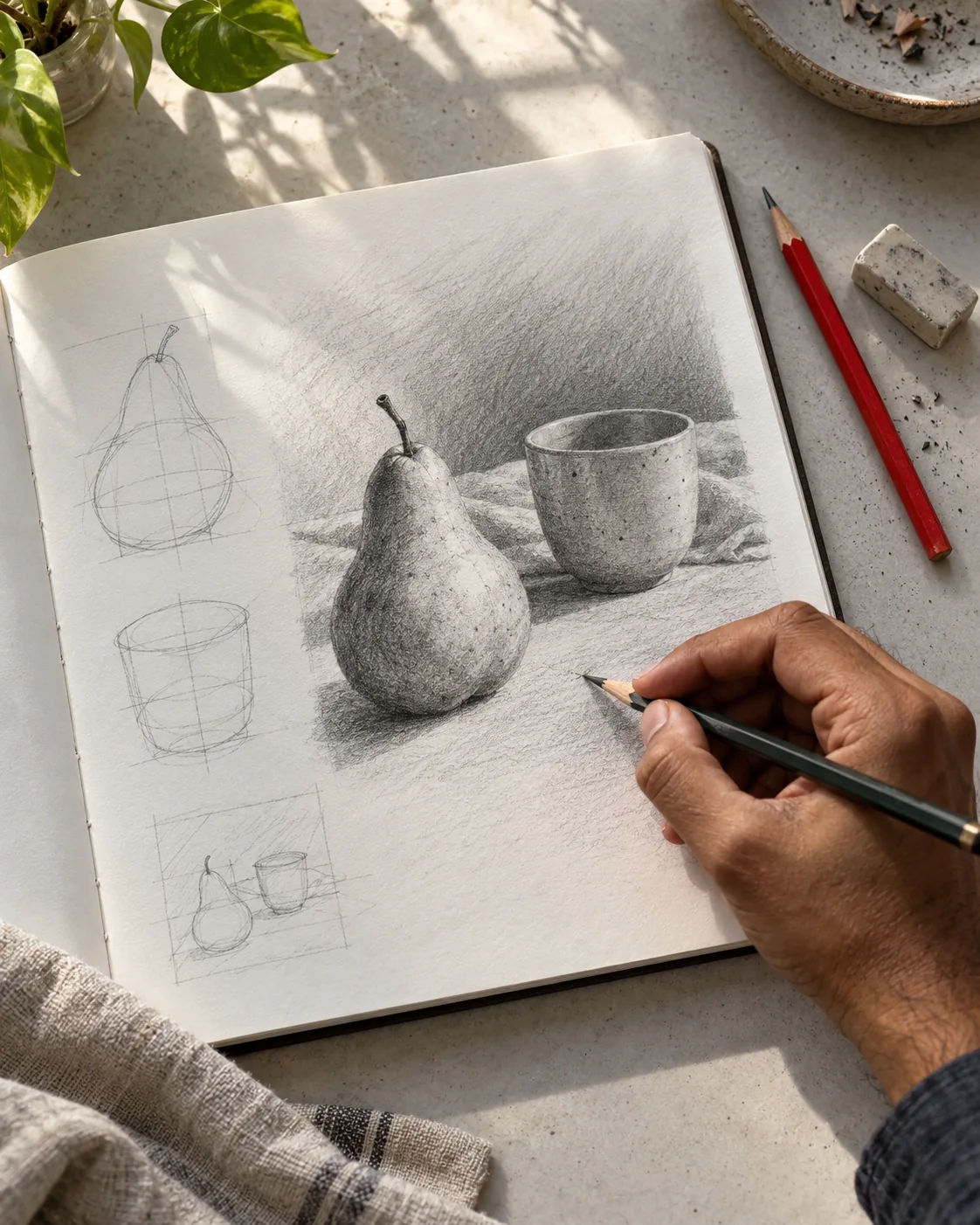
Choose a subject simple enough that you can draw it more than once. Your first attempt is not a test of your talent. It helps you see what you currently understand. Write one question beside it, such as “Why does the opening of the cup look tilted?”. That question will make the next lesson easier to choose.
Pick a path before picking more videos
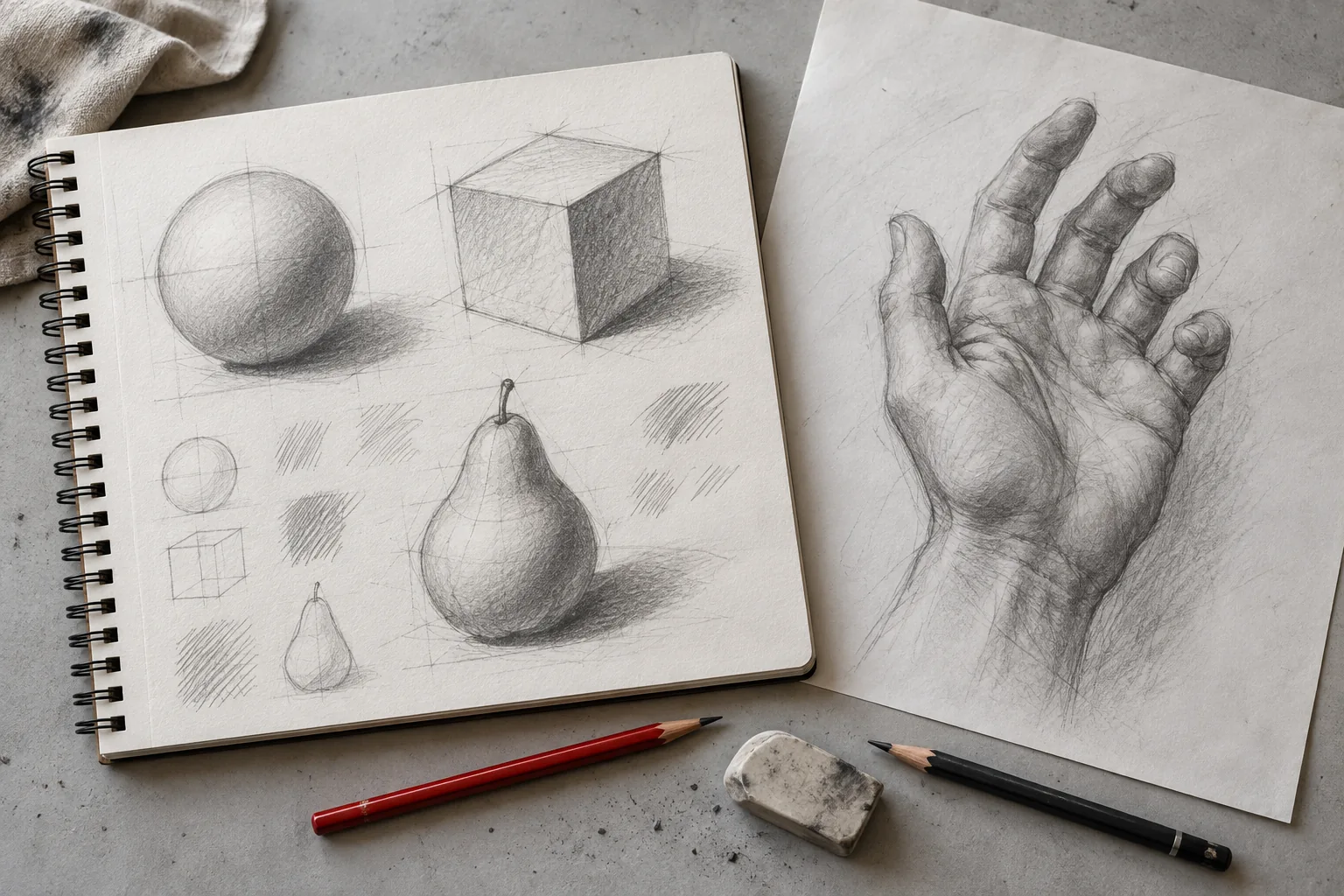
A beginner benefits from an order that makes sense: observation, simple marks, shapes, forms, proportion and light. You do not have to master every skill before drawing something you enjoy. But skipping between unrelated advanced subjects can hide the foundation you actually need.
Use one main learning sequence for a while. Add another tutorial only when it answers a specific question from your current exercise. A video about dramatic portrait lighting may be interesting, but it will not necessarily help you compare the height and width of a cup.
You can explore how a structured sequence works on the NIDAL learning process page. The point is to reduce the number of decisions you make before picking up your pencil.
Make practice part of every lesson
Watching a confident hand make a line can create the feeling that you understand it. Your own attempt is the useful check. Keep paper beside your screen, pause the lesson and try the exercise before opening the next video.
A simple session can have three parts:
- Review one idea from the lesson.
- Attempt a small exercise without copying every mark mechanically.
- Compare your result with the goal and note one question.
For example, if the lesson is about line control, draw several deliberate lines rather than immediately attempting a detailed landscape. If it is about proportion, compare large relationships before adding texture. Match the exercise to the skill.
Ask for feedback you can act on
“Does this look good?” invites a broad answer. A specific question produces more useful guidance: “Which angle is making this box look uneven?” or “Where have I made the shadow too light?”.
Share the exercise, its goal and a clear photo of your attempt. You do not need to apologise for being a beginner. Let the mentor see the part you are working on. After receiving feedback, choose one correction and make another attempt. A list of suggestions only becomes useful when it changes what you do on paper.
Read more about what useful drawing feedback looks like. Feedback should clarify your next practice task, not leave you with another pile of information.
Keep a simple record of your attempts
Date your sketches and keep them, including the awkward ones. Alongside each drawing, record the exercise, what felt difficult and what you plan to try next. You can use a sketchbook page or a note on your phone; the record does not need to be elaborate.
Compare similar exercises rather than unrelated finished artworks. A second cup drawn with better proportions is a clearer signal than a detailed new subject drawn once. Improvement may show up as a more deliberate process before it shows up as a more polished picture.
Start with one useful action today
Choose a simple object, draw its large shapes and identify one thing you would like to understand better. Then choose the lesson that addresses that question. Keep the rest of your saved tutorials for later.
If you want a ready-made path, start learning with NIDAL. The first chapter is free. If you are unsure where to begin, start a conversation on WhatsApp. You do not need a perfect sketchbook page to take the first step.