Specific observation
The learner can see what the guidance refers to in their own drawing.
Real mentor feedback
Useful feedback makes your next practice session more specific. It connects a drawing you made with a change you can actually try.
Watching is a start. Understanding your own drawing is where the next useful step becomes clearer.
For the current way to share your work, begin in NIDAL Learn or ask the team on WhatsApp. We do not promise instant reviews or a fixed amount of live tutoring.
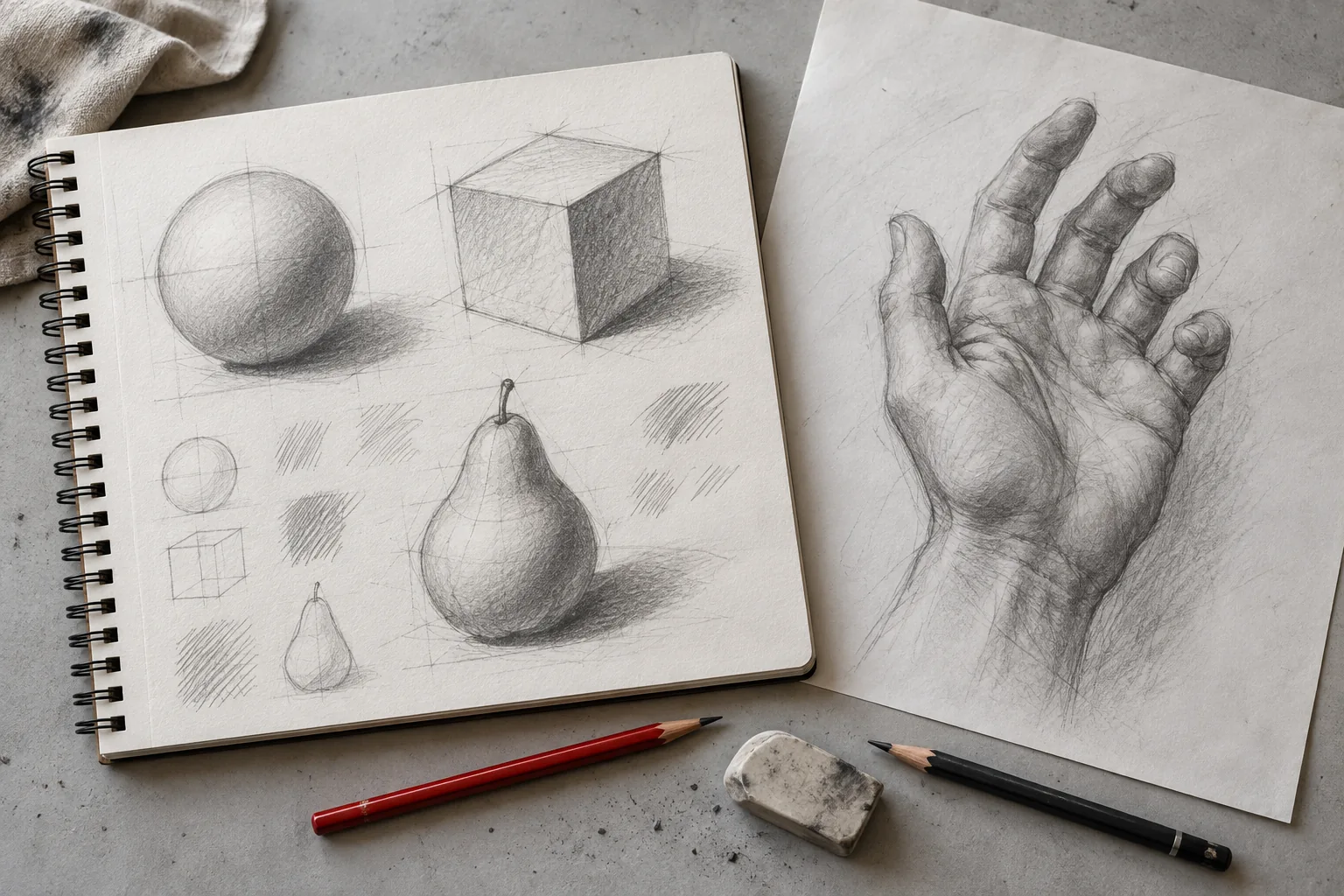
Illustrative teaching example, not a review from a NIDAL learner.
“Your large shapes are clear. Compare the cup’s height with its width before adding details. In your next attempt, sketch the outline lightly and check that relationship first.”
The learner can see what the guidance refers to in their own drawing.
The next attempt has a manageable focus, instead of a list of everything that could improve.
Tell the mentor which exercise you tried and where you felt unsure. A question such as “How can I make these ellipses look consistent?” is more useful than “What do you think?”. Include a clear photo so the drawing is easy to read.
Feedback does not replace practice, and it cannot promise a particular result. It helps you choose the next experiment. For submission options, availability and the current process, start in NIDAL Learn or ask the team on WhatsApp.
Practical advice you can put to work, even before your first lesson.
YouTube and structured drawing classes solve different problems. Compare sequence, practice, feedback and cost before choosing your main learning path.
Read the guideLearn how to ask for drawing feedback, recognise useful guidance and turn one observation into a focused practice exercise.
Read the guideStart with one lesson. Put it on paper. Know what to try next.