Look carefully
Compare shapes, angles and empty spaces instead of drawing only what you remember.
Drawing for beginners
A clear starting point for beginner drawing lessons, with guided exercises and feedback that help you decide what to try next.
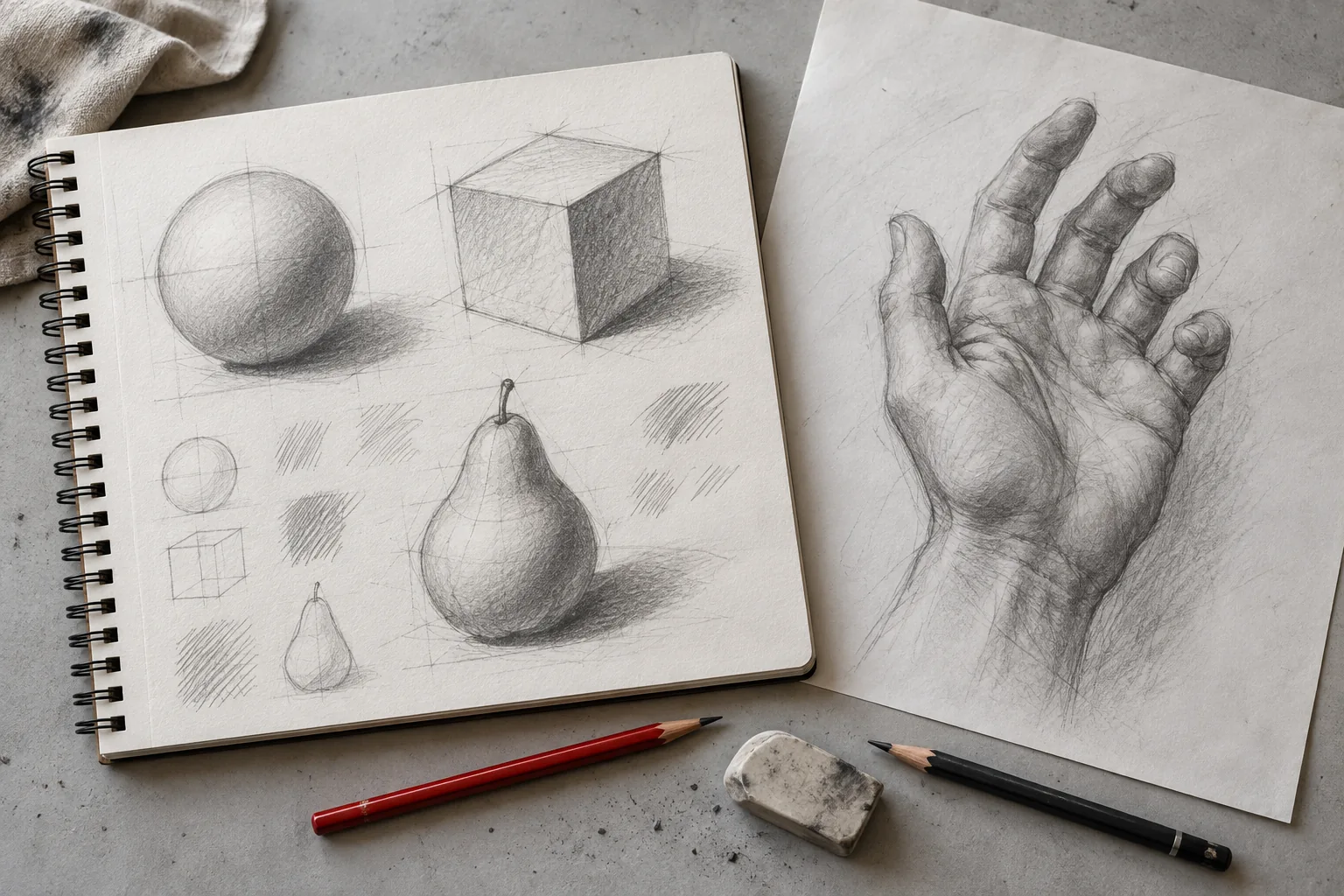
If you are starting from scratch, concentrate on the basics rather than a polished final picture. Learn to notice shapes, compare proportions and make deliberate marks.
NIDAL currently focuses on drawing. Your lessons live in NIDAL Learn, while WhatsApp helps you get started and find your way back to learning.
A drawing becomes easier to understand when you break it into smaller decisions.
Compare shapes, angles and empty spaces instead of drawing only what you remember.
Practice straight, curved and directional marks with a steady, deliberate motion.
Use shapes and volume to make a complicated subject more manageable.
Notice light, middle values and shadows before adding tiny details.
Use your phone or computer for the lesson and leave space beside it for your sketchbook. Give each exercise an honest attempt before moving to the next tutorial. A short, focused session can be more useful than an evening spent collecting videos.
If you are choosing classes for a younger learner, explore the opening chapter together and ask the team about the current course format. This website does not create a learner account or take payment; those steps happen in the learning platform.
Understand the learning processWatching is a start. Understanding your own drawing is where the next useful step becomes clearer.
A simple place to start
Try the learning approach first. Continue when you’re ready to give your practice a little more structure.
See pricing and what’s includedIntroductory monthly plan
₹299 / month
Introductory pricing. Check the current offer and billing details in NIDAL Learn before paying.
NIDAL is an online art-learning platform offering structured lessons, guided practice and real mentor feedback. It is currently focused on drawing. This website explains the approach; your lessons and progress live at learn.nidal.in.
NIDAL is for beginners, people returning to drawing and learners who want a clearer practice routine. Families can explore the first chapter together and ask the team about suitability before continuing.
No. Begin with the opening chapter and work through the foundations. A pencil, paper and willingness to practice are a good starting point.
Real guidance helps you understand what you did well, what needs attention and what to practice next. Start in NIDAL Learn or contact the team on WhatsApp for the current submission process. Feedback is not a promise of a fixed response time or unlimited live tutoring.
Yes. The first chapter is free, so you can try the learning approach before deciding whether to continue. Open NIDAL Learn to begin.
The current introductory price is ₹299/month. The first chapter is free. Review the current offer and billing terms in NIDAL Learn before paying.
Yes. You can open NIDAL Learn in your phone’s browser. Keep paper nearby for practice and use WhatsApp if you need help getting started or continuing.
WhatsApp helps with onboarding, lesson continuation and reminders. Start a conversation with NIDAL and follow the guidance there. Your full lessons and saved progress remain in NIDAL Learn; reminders depend on the options you choose.
Start with one lesson. Put it on paper. Know what to try next.