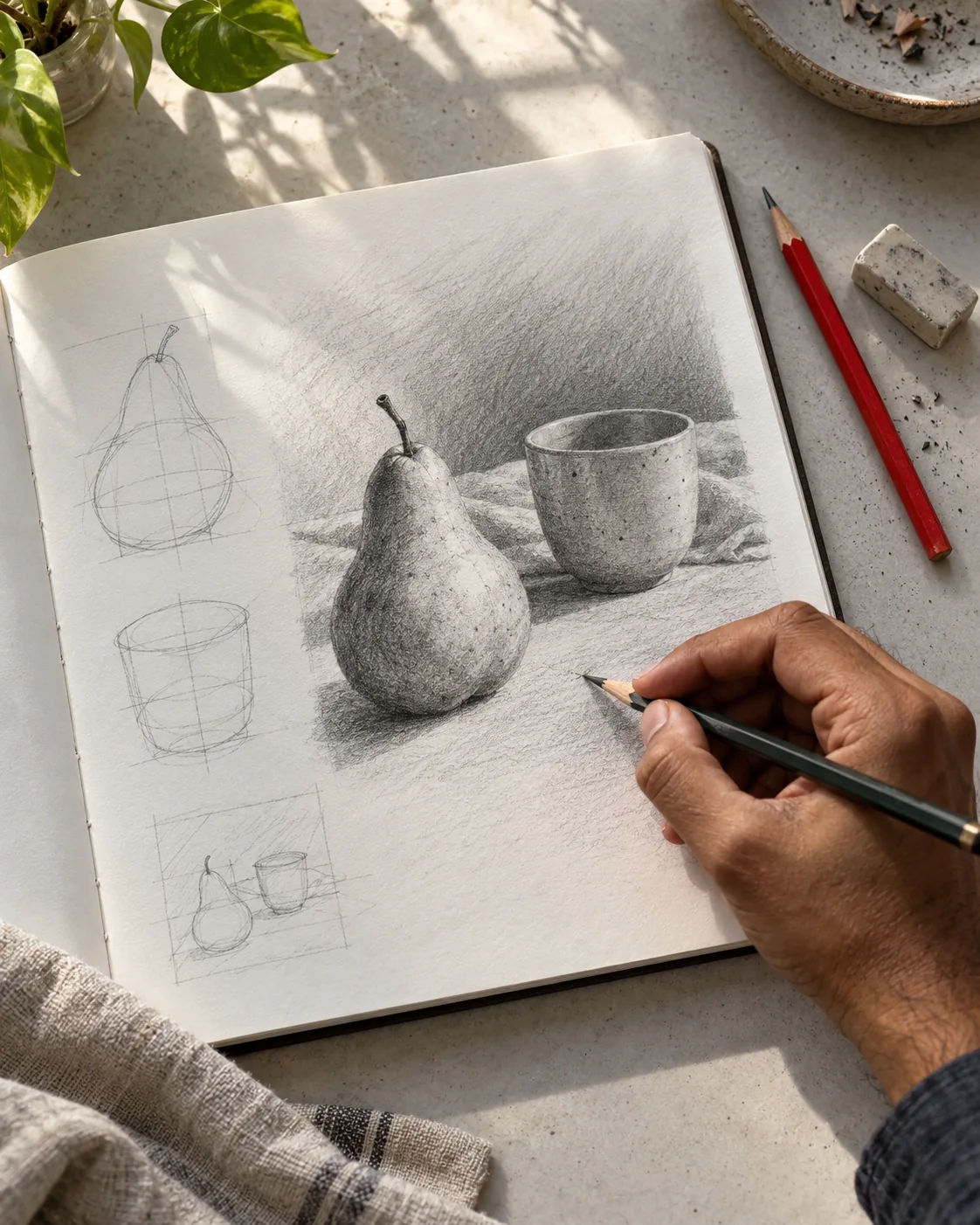
Start with what is nearby
Draw your breakfast cup, a leaf or the view from a chair. Familiar subjects remove the need to hunt for inspiration. A short study is a complete activity even when it is not a complete illustration.
Give the habit a small home
Keep paper and a pencil where you already spend a few quiet minutes. Choose a realistic cue such as after tea or before a weekend walk. A repeatable ten-minute session is more useful than waiting for a free afternoon.
Mix learning with play
Try a focused shading exercise one day and a playful sketch the next. Change the subject, draw with one continuous line or sketch an object from memory and then check it. Curiosity can sit alongside technique.
Let some pages stay private
You can draw without posting the result. If you do share, choose the kind of feedback you want: proportion, values or a practical next step. Likes are not a measure of what you learned.
A clearer path when you want it
NIDAL’s opening chapter is free. Use structured lessons when you want direction and practise at a pace that suits your life. We do not promise health outcomes; the invitation is simply to make time for a creative activity.
Put it on paper
A small exercise. A useful start.
Choose one object you use every day. Draw it for five minutes on three different days. Try a different angle each time and write one thing you noticed.