A small kit is enough
An HB or 2B pencil, ordinary unruled paper and an eraser are enough for the first exercises. Keep a few pages together so you can compare attempts. Buy more tools when you understand the problem they solve.
Build with simple shapes
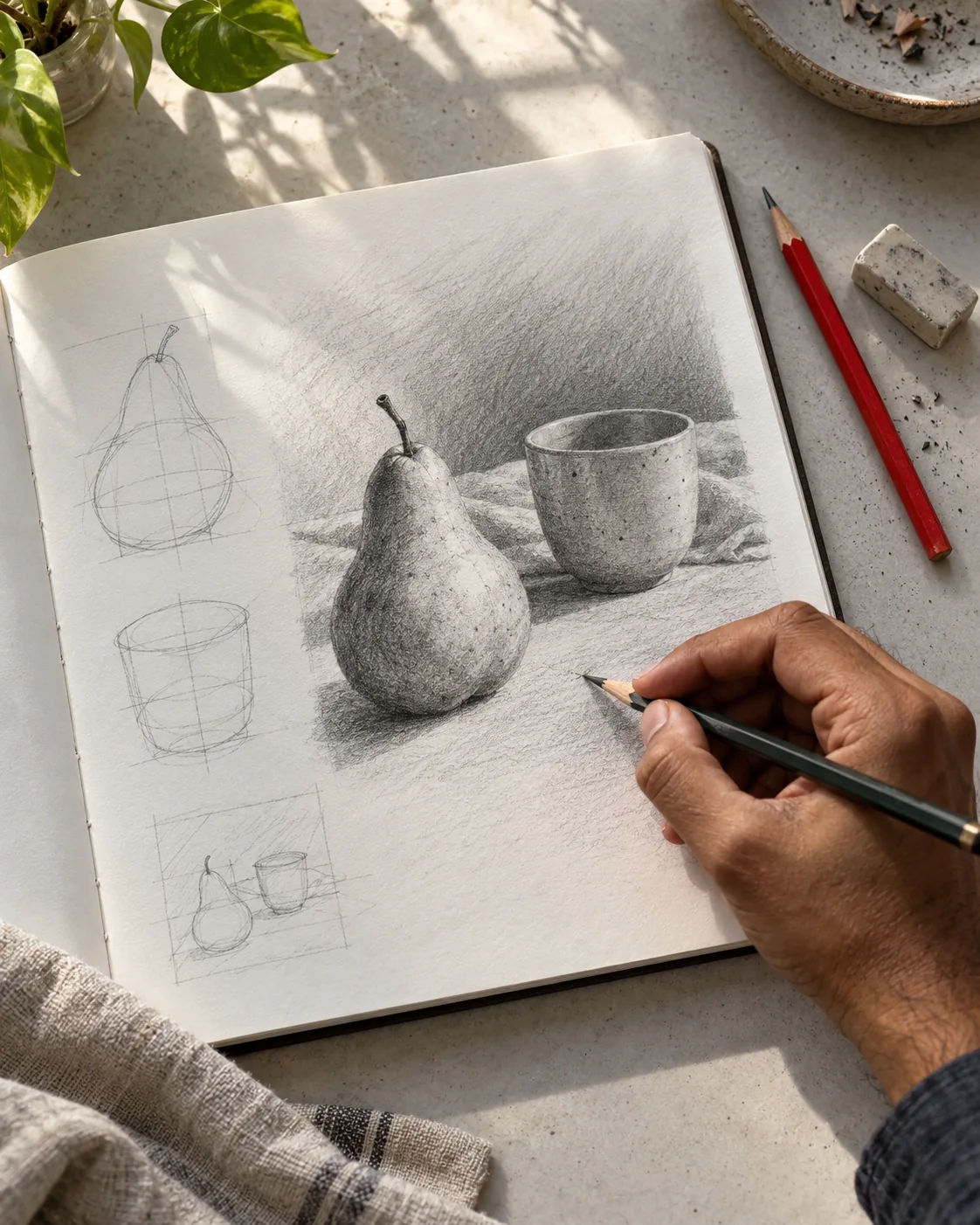
A mug can begin as an oval and a rectangle. A pear can begin as two overlapping rounded shapes. Draw these lightly and compare their width and height before tracing a final contour. Construction is a temporary guide, not an outline you must preserve.
See the object, not its name
Your memory has a symbol for a cup. The actual cup has a particular angle, handle and opening. Look back at your subject after each small decision. Compare the empty space beside the handle as carefully as the handle itself.
Add one light source
Place the object beside a window or lamp. Find the lightest area, the main shadow shape and the cast shadow on the table. Try three values first. More shades help only when the large light-and-dark relationships make sense.
Keep the first week manageable
Try ten minutes of lines on day one, shapes on day two, a mug on day three and a repeat of that mug on day four. Rest or choose something enjoyable next. Write a single observation after every attempt. You are building a habit of seeing and correcting, not proving talent.
Put it on paper
A small exercise. A useful start.
Put a mug on your desk. Spend two minutes comparing height and width, three minutes blocking an oval and body, three minutes refining the handle and two minutes marking the largest shadow. Stop and name one thing to change next time.