Start with the drawing’s intention
Say what you were trying to do and which part feels uncertain. A proportion study and an expressive sketch need different conversations. Context helps a mentor focus on the decisions that matter to your goal.
Specific beats impressive
“Improve the shading” is broad. “Keep the light-facing side lighter than the reflected light in the shadow” gives you something to check. Good feedback identifies a visible issue, explains why it matters and suggests a practical next attempt.
Change one thing first
If the silhouette is inaccurate, adding texture may distract from the main problem. Choose one priority, practise it in a small study and redraw the subject. Keep both versions so the change is visible.
Human guidance and honest expectations
NIDAL’s positioning is real mentor guidance. This page does not advertise an automated critique tool, instant reviews or unlimited mentoring. Begin in NIDAL Learn or ask the team on WhatsApp for the current way to submit work and receive feedback.
Use the demonstration thoughtfully
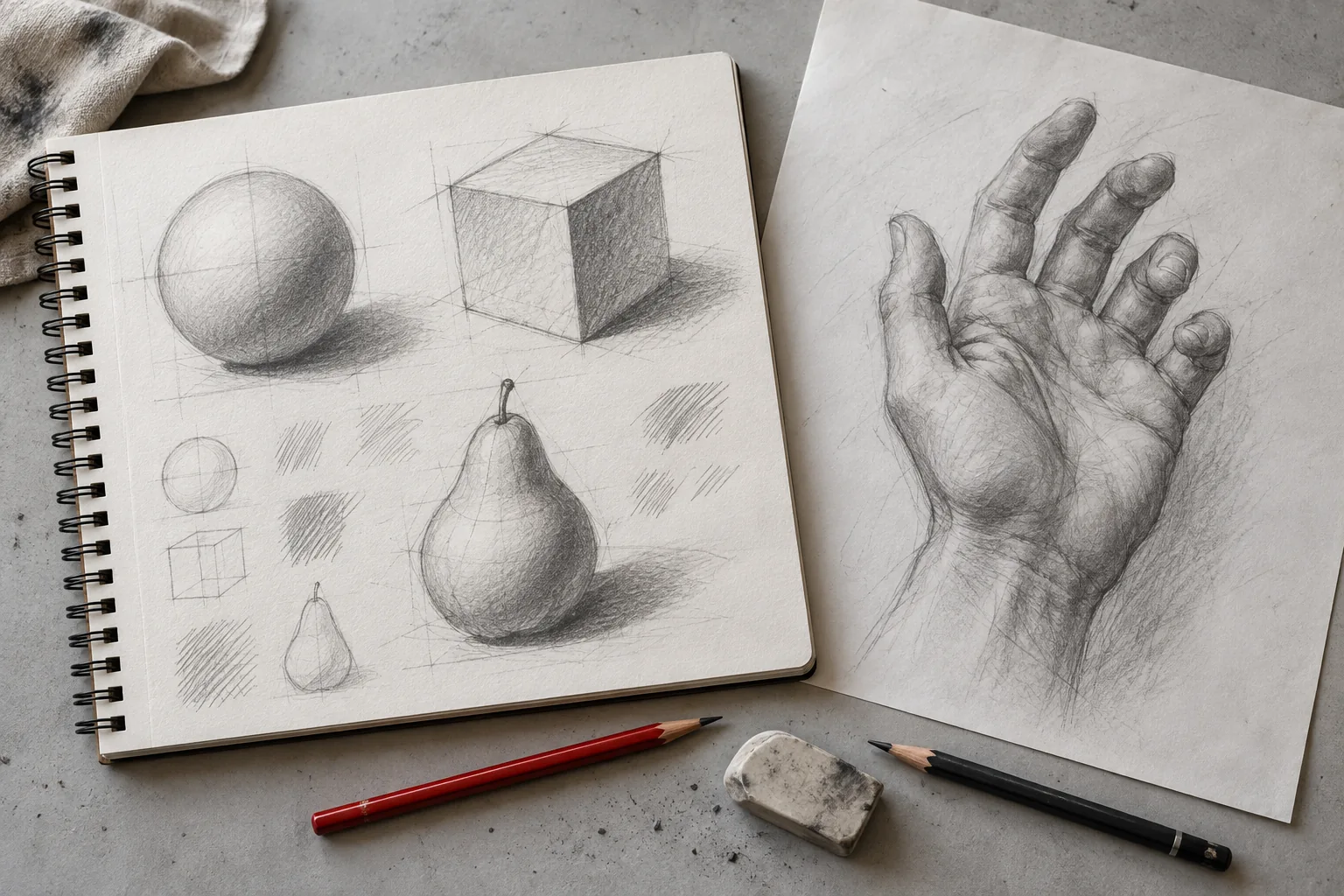
The comparison below is a teaching illustration, not a real learner submission or guaranteed result. It shows why a consistent light source, a clear shadow group and a grounded cast shadow can communicate form more effectively.
Put it on paper
A small exercise. A useful start.
Write one question about your sketch. Identify the biggest visible issue, make a five-minute study of that issue and revise the drawing. Compare decisions rather than judging whether the result is “good”.