Choose a subject, then a skill
A portrait involves proportion, form and values. A character in a room also needs perspective. Pick one skill inside a subject you care about. That makes practice relevant without asking you to abandon your interests.
Start anatomy with observation
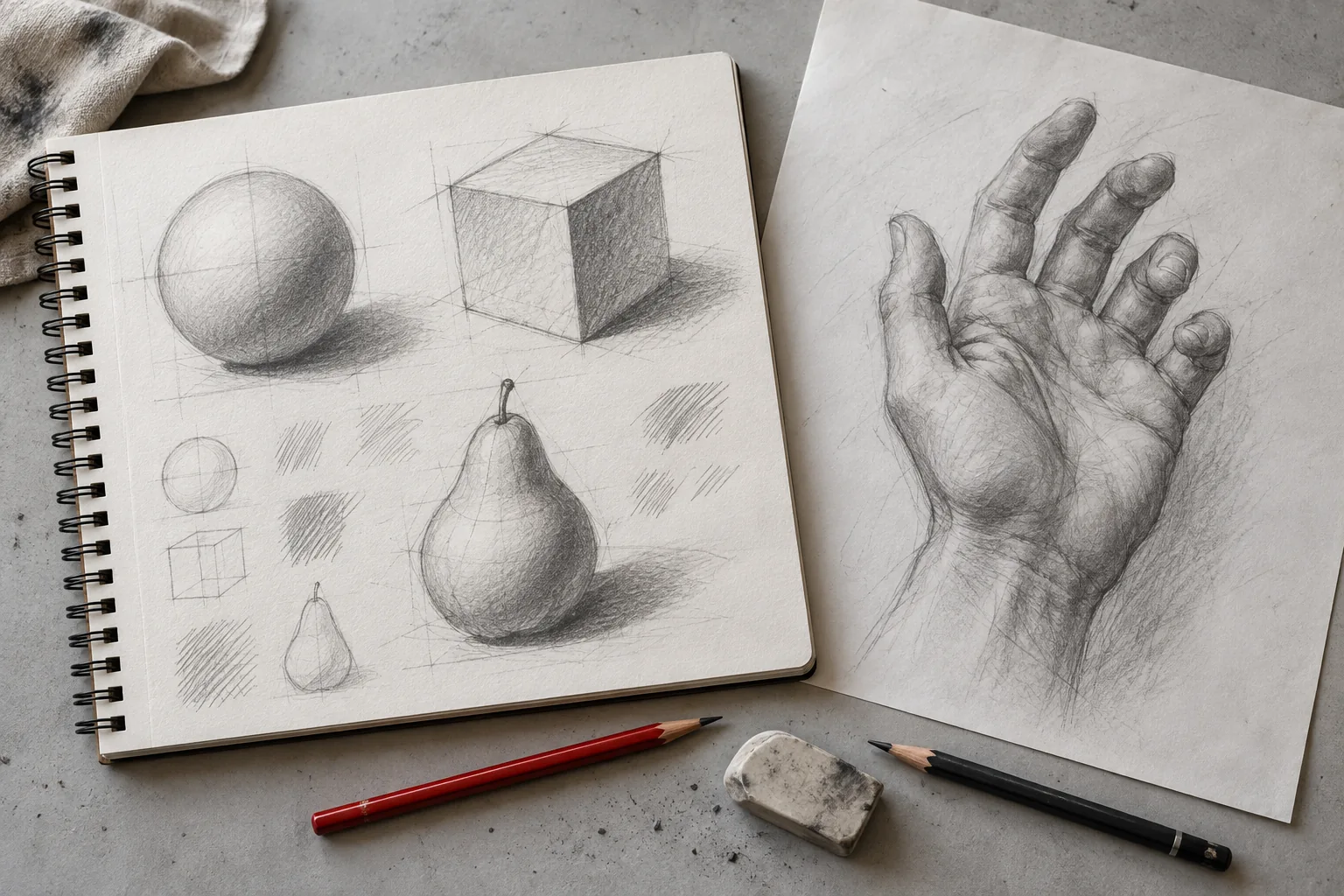
Study simple hand poses or the broad proportions of a head before detailed muscles. Use your own hand or suitable reference material. Simplify the forms and compare angles. Avoid treating any one proportion guide as a rule for every person.
Keep a practice portfolio
Save an early attempt, an exercise and a revised attempt together. Add a sentence explaining what you changed. A portfolio of learning shows decisions and effort, rather than only displaying the drawings you consider perfect.
Ask for useful feedback
Name the thing you want help with. Ask whether the eye placement, light direction or room perspective reads clearly. Constructive feedback discusses the work and an actionable next step; it should not judge your worth or talent.
Start with family involvement
If you are under 18, involve a parent or guardian before creating accounts, sharing contact details or buying membership. Public guides require no account. Do not put school details, addresses or private information into a public drawing or WhatsApp message. Ask the team about suitability and current learning arrangements before paying.
Put it on paper
A small exercise. A useful start.
Choose an earlier sketch. Pick one issue, such as proportions or shadows, practise that skill for ten minutes and draw a second version. Keep both with a note about the change.