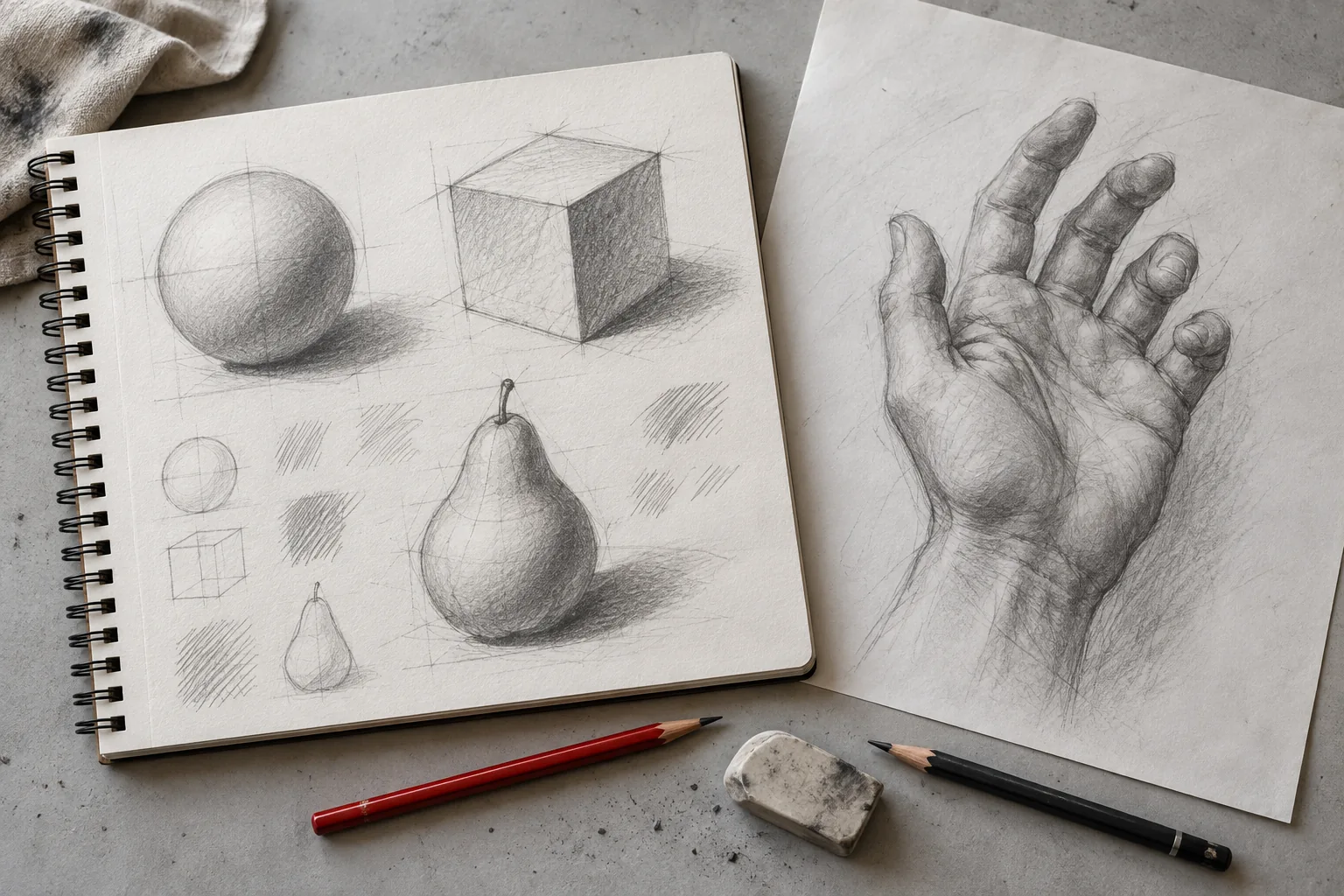
A drawing routine often fails because the session is too vague or too ambitious. “Practise more” does not tell you when to begin, what to draw or when to stop. A useful routine answers those questions in advance.
Consistency does not mean drawing every day regardless of circumstances. It means having a realistic way to return. Plan for the week you actually have, including busy evenings and missed sessions.
Choose a repeatable cue
Attach drawing to something already present in your life: after evening tea, before a weekend walk or during a quiet lunch break. Put the pencil and paper where you will use them. Reducing the setup steps makes beginning easier.
Choose two or three sessions a week if that is realistic. A ten-minute appointment you can keep teaches you more about your routine than an idealised daily commitment you abandon.
Decide the exercise before the session
Pick one skill and one subject. “Draw a mug and compare the ellipse” is clearer than “work on drawing”. You can spend the session making and checking marks instead of searching for a perfect reference.
Alternate focused studies with subjects you enjoy. Technical exercises support your interests; they should not replace them completely. If you like portraits, a proportion study can be followed by a short face sketch.
Make the session small enough to finish
Set a timer for ten or fifteen minutes. Spend the first minute observing, the middle minutes drawing and the last minute noting one decision. Stop before turning the study into an exhausting obligation.
A finished practice session is not the same as a finished artwork. The session can succeed because you checked a proportion or kept a light direction consistent, even if the page remains rough.
Record what you learned
Date your sketches and write a concrete note. “The shadow was too light” helps you plan a next attempt. “This is terrible” gives you no useful direction. Keep your notes about visible choices on the page.
Every couple of weeks, revisit the same object or exercise. Compare like with like: a mug study from one angle and another mug study from a similar angle. Different subjects and lighting can make improvement difficult to judge.
Plan an easy restart
After missing a session, return with a familiar object and a short task. Avoid trying to repay a missed week with a marathon. The goal is to restart the routine, not punish yourself for interrupting it.
If your original cue repeatedly fails, change it. A routine is a practical arrangement, not a test of character. Move the materials or choose a different time before concluding that drawing is not for you.
A sample week
- Session one: draw a cup using light construction shapes.
- Session two: shade a simple rounded form with three values.
- Session three: sketch something you enjoy and apply one of those decisions.
After each session, choose one next step. If you prefer a clearer lesson sequence, NIDAL Learn offers a free opening chapter. WhatsApp can help with onboarding and returning to the platform; reminders depend on the arrangements you choose.
Read art as a hobby for a low-pressure approach or the beginner roadmap for a sequence of drawing foundations. Your routine should make it easier to create, not give you another reason to avoid the sketchbook.