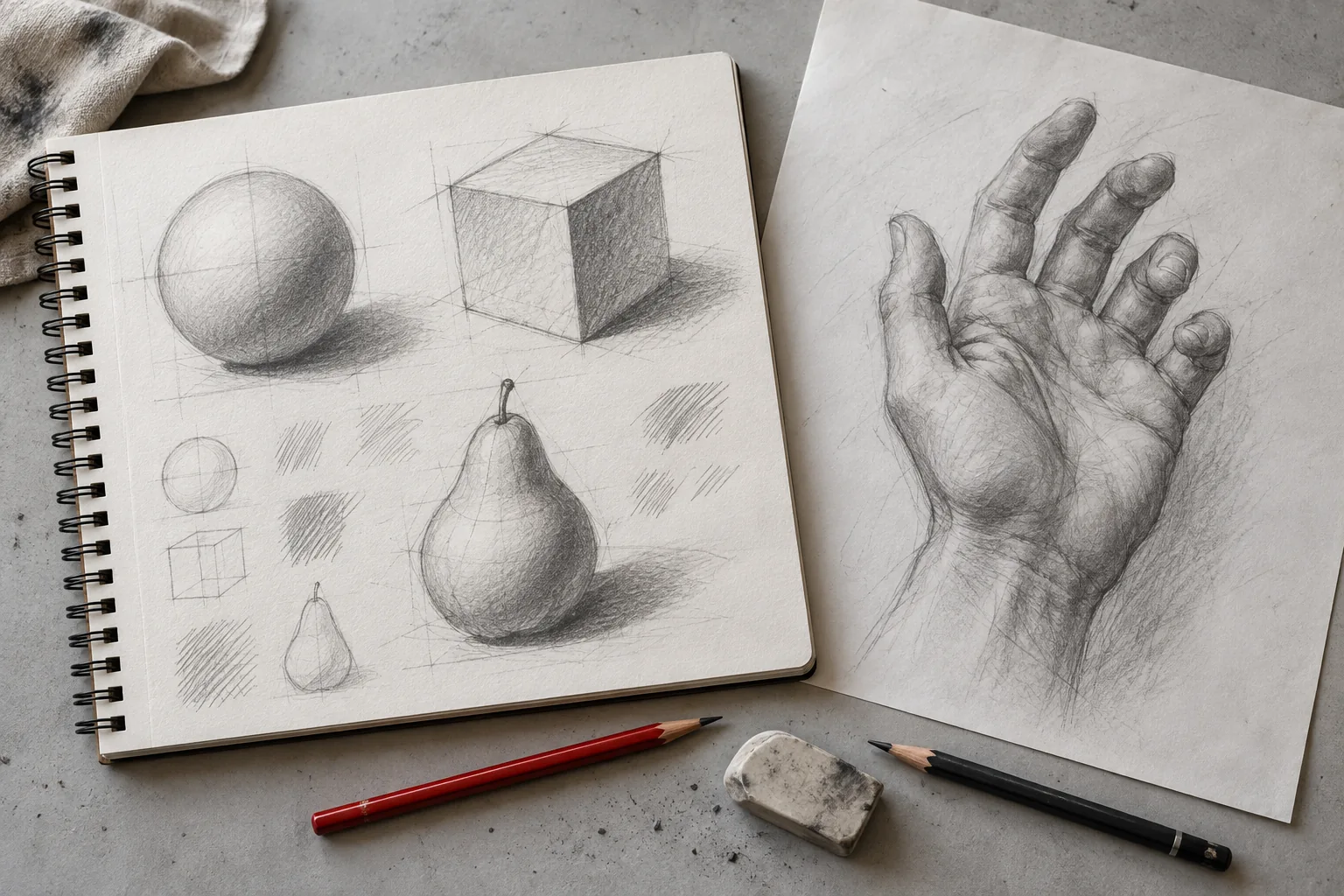
Design entrance preparation should begin with the current official information for the actual programme you are considering. Do not assume that an old test pattern, a coaching advertisement or a general drawing guide describes every present admission route.
This article discusses useful visual skills. It is not an admissions checklist, an exam prediction or evidence that NIDAL provides a dedicated entrance-coaching programme.
Check the official programme guidance
The NIFT admissions page publishes official programme information and notices. Its 2026 materials distinguish selection processes across programmes. Use the latest prospectus to check eligibility, assessment stages and dates for your own programme and category.
The NID admissions portal currently publishes 2027–28 handbooks and amendments. It refers to DAT Prelims and DAT Mains and says assessment structures may change. NID also states that it has not authorised coaching providers. Information here was checked on 12 October 2026; return to the official portal before making an application decision.
Observation makes ideas believable
Choose an everyday object and draw it from three viewpoints. Compare the height, width, openings and handle positions. Make the views describe the same object rather than three unrelated symbols.
Then observe how a person actually uses it. Where does the hand grip? What moves? Which part supports weight? These observations can give you material for useful design ideas rather than decorative modifications.
Perspective explains space
Simple boxes help you organise receding edges, eye level and overlapping forms. Practise a box below the horizon, then above it. Notice how the visible surfaces change. Add a smaller object only after the large construction is coherent.
Our perspective guide includes an annotated one-point example. The purpose is clear visual communication. A correct construction supports an idea, but a diagram still needs a meaningful idea to communicate.
Composition directs attention
Make three small thumbnail sketches of the same scene. Change the viewpoint, the size of the main object and the surrounding space. Decide which version makes the important action easiest to understand.
Keep the sketches small so you can explore alternatives quickly. A polished first idea can become difficult to abandon even when a simpler arrangement communicates more effectively.
Develop alternatives rather than decorating one answer
Choose a practical problem such as carrying a wet umbrella. List who experiences it, where it happens and what constraints matter. Sketch two possible responses, then show each in use.
Explain a trade-off: size, portability, cleaning or ease of handling. Do not add features simply to make the drawing look inventive. A design decision should answer something you observed.
Use a practice record
Keep observations, thumbnails, alternatives and revised sketches together. Note what you changed after reviewing the work. This creates a record of visual thinking rather than a folder of isolated finished images.
Rotate observation, perspective and storytelling exercises across the week. Foundational drawing lessons can support these skills, but they do not replace checking the current admissions requirements or practising the tasks relevant to your intended programme.
Where NIDAL fits honestly
NIDAL offers drawing foundations, guided practice and real mentor feedback. It does not claim NIFT or NID affiliation, guaranteed admission, dedicated exam-test coverage or verified entrance results. Explore our NIFT-related foundations guide and NID visual thinking guide for additional practice ideas and official resource links.